


CULINARY CAPITALS
PERU

This trip moves through Peru by way of its kitchens, from Lima's restless dining scene to Cusco's older, slower food traditions. Markets, tastings, and time with the people actually cooking give you the real shape of the country's Indigenous, coastal, and Andean roots. Everything between meals exists to give those meals context. This is Peru eaten with attention, not just appetite.
Note that everything you see here is an example of what your trip could look like. Your adventure will be tailored specifically to you.

WHEN TO GO
DURATION
MAY - SEP
7 NIGHTS
LANGUAGE
SPANISH, QUECHUA
CURRENCY
SOL
ESTIMATED COST
$7,900
per person, excl. int'l flights
(based on two adults sharing)
Why this adventure
Peruvian food didn't get famous by accident. It's what happens when centuries of history, staggering biodiversity, and a fierce sense of identity all end up on the same plate, and Lima and Cusco are where that story is easiest to read. We get you behind the pass, not just to a table, with the chefs, farmers, and artisans actually building modern Peruvian cuisine right now. This isn't a list of reservations we managed to get. It's the difference between eating well and understanding why the food tastes the way it does.

Journey flow
Things start on the coast, where Lima moves fast: markets that don't slow down for anyone, neighborhoods built around the water, kitchens that treat tradition as a starting point rather than a rulebook. You'll spend your days tasting and talking, watching how Indigenous ingredients collide with global technique. Then the pace changes entirely as you head inland to the Sacred Valley and Cusco, where altitude and ritual demand a different kind of meal. Food slows down up there. Ingredients come with names and histories attached. By the end, you're not just full. You actually understand what you ate.


Take it farther
For guests who want to go further, we can build in a private cooking session on ceviche, taught by someone who sources their seafood the way they'd want a chef to. There's also a strong case for a Sacred Valley pachamanca, a meal cooked entirely underground with heated stones, hosted by an Andean family rather than staged for a group. We'd skip the wine and pisco extension here. Peru's wine scene doesn't compete with what's already on the table.

Adventure highlights

PRIVATE TASTING MENUS
Seasonal menus built around pacing and wine, in settings small enough that you're not fighting a dining room for the chef's attention. This is where Lima's reputation as one of the world's most interesting food cities actually earns itself.

ANDEAN CULINARY TRADITIONS
In the Sacred Valley, food still runs on a much older clock: earth ovens, heirloom potatoes numbering in the hundreds, techniques that predate refrigeration by centuries. Meals here come with stories attached, told by the people still living them.

MARKET-TO-TABLE ENCOUNTERS
Peru's markets aren't curated for visitors, they're where the country actually shops. Walking them with someone who can explain what you're looking at turns a pile of unfamiliar produce into the backbone of everything you'll eat for the rest of the trip.

CHEF-LED TASTINGS
Time with the people actually running Peru's most talked-about kitchens, on their terms rather than a set menu handed to a dining room. You'll hear the reasoning behind the plate, not just taste the result.
How it unfolds

DAYS 1-4
LIMA
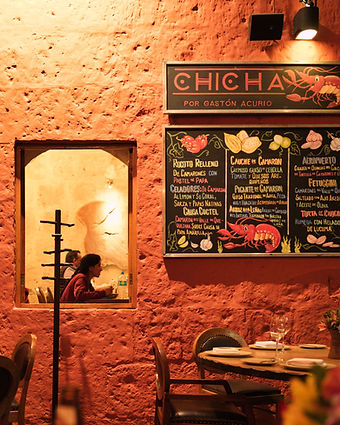
Lima doesn't ease you in. Days here move through Barranco and Miraflores, San Isidro and the markets that keep the whole city fed, with tastings and chef conversations built around the coast's raw materials rather than a fixed list of restaurants to check off. Ceviche gets its due, but so does the Chinese and Japanese influence that shaped so much of Lima's food identity, along with the native ingredients that were here long before either. This is a city that takes eating seriously without making a production of it, and four days is enough to actually understand why it keeps winning that reputation rather than just taking the reputation on faith.
DAYS 5-7
SACRED VALLEY & CUSCO
The altitude changes everything, including the food. Once you're in the Sacred Valley, meals slow down and the ingredients start coming with stories: heirloom potatoes numbering in the hundreds, corn the size of your thumb, techniques for cooking underground that predate the Inca themselves. Time here is split between Cusco's own markets and kitchens and the valley's smaller villages, where the pachamanca and other Andean traditions aren't performed, they're just Tuesday. It's a deliberately different register than Lima's energy, and that contrast is the whole point.

Where you could stay

BELMOND MIRAFLORES PARK
A clifftop hotel in Lima's Miraflores district, perched above the Pacific with the city's boardwalk running right past the front door. The organic farm-to-glass focus shows up at Belo Bar, where the pisco sours have a real claim to being some of the best in the city, and the rooftop pool looks straight out over the ocean at sunset. Larcomar and some of Lima's best-known restaurants, including Central, sit a short walk away. It's the obvious base for guests who want ocean air and easy access to the city's food scene without sacrificing polish.

HOTEL B
A restored 1914 Belle Époque mansion in Barranco, Lima's bohemian, art-soaked answer to a quieter neighborhood elsewhere in the city. The place doubles as a private gallery, with several hundred pieces of Latin American and Peruvian art filling the halls, and the kitchen leans into a Peruvian-Mediterranean menu built for guests who'd rather eat somewhere with a point of view than a predictable one. Barranco itself, all murals, galleries, and old mansions turned into something else, gives the hotel a sense of place that a bigger, more polished property in a different part of the city just can't manufacture.

INKATERRA HACIENDA URUBAMBA
A former colonial cattle ranch turned hillside retreat in the Sacred Valley, set on a hundred acres between Cusco and Machu Picchu with the Andes doing most of the talking through every window. The kitchen runs on an earth-to-table model, pulling quinoa, corn, and a long list of potato varieties straight from the property's own organic farm. Guests can walk the fields themselves before dinner shows up with the same ingredients on the plate. Stargazing here is genuinely worth staying up for, the valley gets dark enough that it actually matters.


Ready to start planning?
All Peregrine trips include:
Every trip we design starts from scratch, built around how you travel and what you're actually after. No fixed routes, no shared departures, no compromises. If something on this page resonated, that's a good place to start a conversation.
-
A dedicated travel designer to custom-build your trip
-
A network of on-the-ground guides and local experts
-
Accommodations chosen for style, not star-rating
-
Private transfers throughout your destination
-
Around-the-clock support while traveling

Related itineraries

